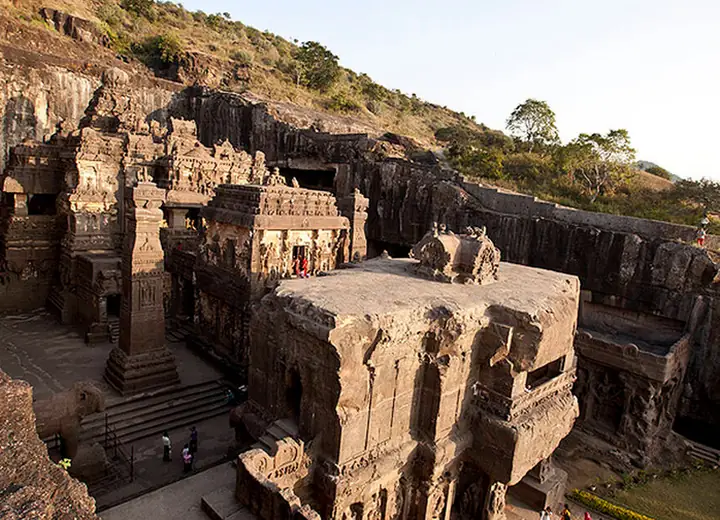
Long before the Mughals, long before the Nizam Shahis, even before the Rashtrakutas who built Kailasa Temple — the Deccan Plateau was ruled by the Satavahanas, a dynasty whose influence stretched from the Arabian Sea to the Bay of Bengal and whose capital Paithan (ancient Pratishthana) sat on the Godavari River about 50km from present-day Aurangabad.
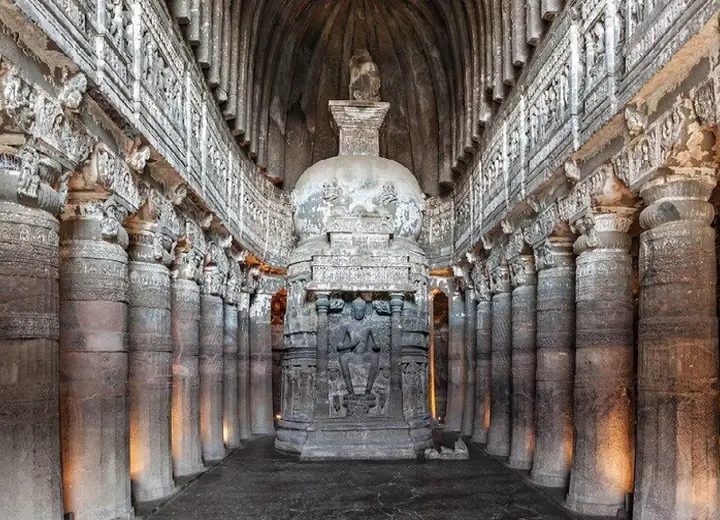
The Satavahanas were the first rulers to bring Buddhist patronage to the Deccan Plateau on a significant scale. The earliest caves at Ajanta — Caves 9, 10, 12, 13, and 15A — were excavated during the Satavahana period (2nd–1st century BCE), before the more elaborate painterly caves of the 5th century. These early caves, chaityas and viharas of severe and elegant design, established the template that would be elaborated by later donors for centuries.
Paithan itself was one of the most important commercial cities in the ancient world. The Periplus of the Erythraean Sea — a 1st century CE Greek maritime guide — mentions 'Plethana' (Paithan) as a major inland trading city reached via the Godavari from the western ports. Goods from Rome, Egypt, and Mesopotamia flowed through Paithan in exchange for cotton, spices, and the fine textiles that the Deccan produced.
The Paithani saree that remains Maharashtra's most prestigious textile takes its name from this ancient city — the silk weaving tradition established under Satavahana patronage survives to the present day in the workshops of Paithan and Yeola.
From Hiranya Resort, Paithan is approximately 50km — a half-day excursion that also allows a visit to the Jayakwadi Dam, one of Maharashtra's largest, on the return journey.