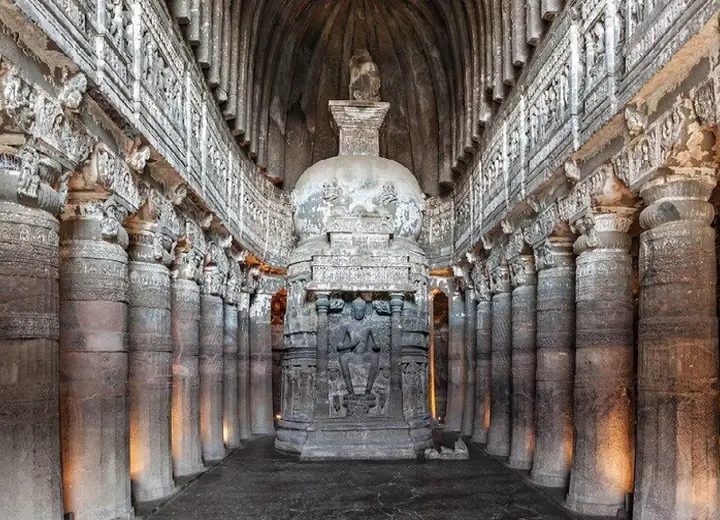
The Jain caves of Ellora, numbered 30 to 34, sit at the northern end of the site and were excavated in the ninth and early tenth centuries by followers of the Digambara Jain tradition. The highlights are Cave 30, the Chhota Kailash, Cave 32, the two-storey Indra Sabha, and Cave 33, the Jagannath Sabha. They are smaller than the Buddhist and Hindu caves but hold some of the most delicate carving at Ellora, and they are usually far quieter.
Getting there and planning your time
The Jain group lies some distance north of the Kailasa temple, so most visitors reach it by vehicle or by the shuttle service that runs within the site, rather than on foot. Check on the day how the shuttle is operating. Allow at least an hour to an hour and a half for the group; more if you enjoy looking closely at sculpture.
Many people leave the Jain caves until the end of their visit and then find they are tired or short of time. If carving interests you, consider seeing them first, while you are fresh, and returning to the busier central caves later. Remember that Ellora is closed on Tuesdays.
Cave 30: Chhota Kailash
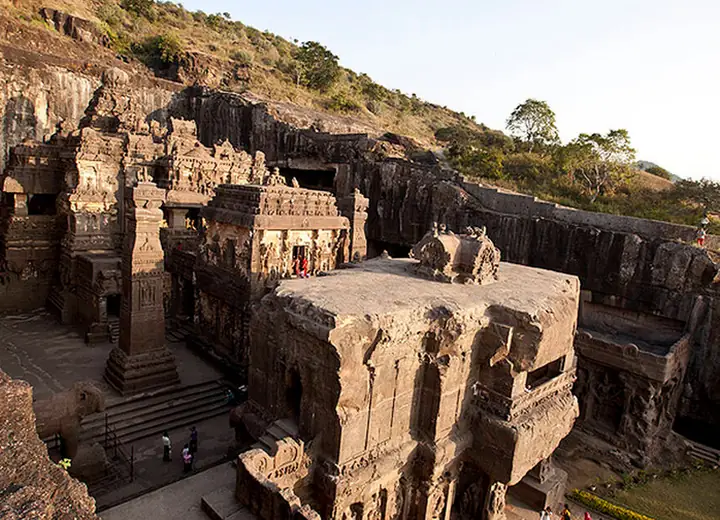
The name means the little Kailasa, and the idea is clear as soon as you see it. Like the great Kailasa temple, Cave 30 is a temple carved downwards and inwards from the living rock, with a courtyard around a free-standing shrine. It is on a much smaller scale and was left unfinished in places.
Look for the reliefs of dancing figures, including a many-armed Indra shown with rich ornaments. Unfinished parts of the cave are interesting too, because they show how the sculptors roughed out the rock before finishing the details.
Cave 32: Indra Sabha
The Indra Sabha is the finest of the Jain caves and one of the most rewarding spaces at Ellora. Despite its name, which links it to the king of the gods, it is a Jain temple, and the name probably comes from the many figures of heavenly beings in its carving.
You enter a courtyard with a small monolithic shrine at its centre. Look for the carved elephant and the tall pillar in the court. Beyond, the cave rises in two storeys. The lower level is simpler; climb the stairs to the upper hall, where the pillars are richly carved and the ceilings once carried paintings, of which faint traces remain.
Two sculptures here are especially worth finding. One is the yaksha Matanga, also called Sarvanubhuti, seated on an elephant. The other is the yakshi Ambika, seated on a lion beneath a mango tree heavy with fruit. These guardian figures appear in many Jain temples, but seldom so gracefully.
Cave 33: Jagannath Sabha
Next door, the Jagannath Sabha is the second-largest of the Jain caves. It also has two storeys, with massive pillars and elephant heads worked into the design. Its images of the Tirthankaras, including Parshvanatha and Mahavira, are carved with fine detail.
It is less famous than the Indra Sabha, so you may have it almost to yourself.
Cave 31 is a smaller shrine with Tirthankara images and is worth a brief visit as you move between the larger caves. Cave 34, at the end of the group, is small but charming, with further figures of Matanga and Ambika and carved Tirthankaras. Look for the doorway details and the way the cave opens off the neighbouring hall.
Key figures to recognise
A little familiarity with Jain imagery makes these caves come alive:
- Tirthankaras are shown seated in meditation or standing upright with arms straight at their sides, calm and unadorned.
- Parshvanatha, the 23rd Tirthankara, is shaded by the hood of a many-headed serpent.
- Bahubali, also called Gommateshwara, stands in such deep meditation that vines have grown up around his legs and arms.
- Mahavira, the 24th Tirthankara, is often identified by a lion emblem on the pedestal.
Parshvanatha and Bahubali often appear as a pair on facing walls, so look across the room when you spot one of them.
On the hill above the Jain caves is a large later image of Parshvanatha, with an inscription dated to 1234 CE, which shows that the site remained sacred long after the caves were cut.
Tips for a good visit
- Carry a small torch; the inner halls can be dim.
- Remove footwear where asked, and dress respectfully, as these are still places of reverence.
- Flash photography is not allowed inside; use a steady hand or a higher ISO.
- Late afternoon light is soft and pleasant in the courtyards.
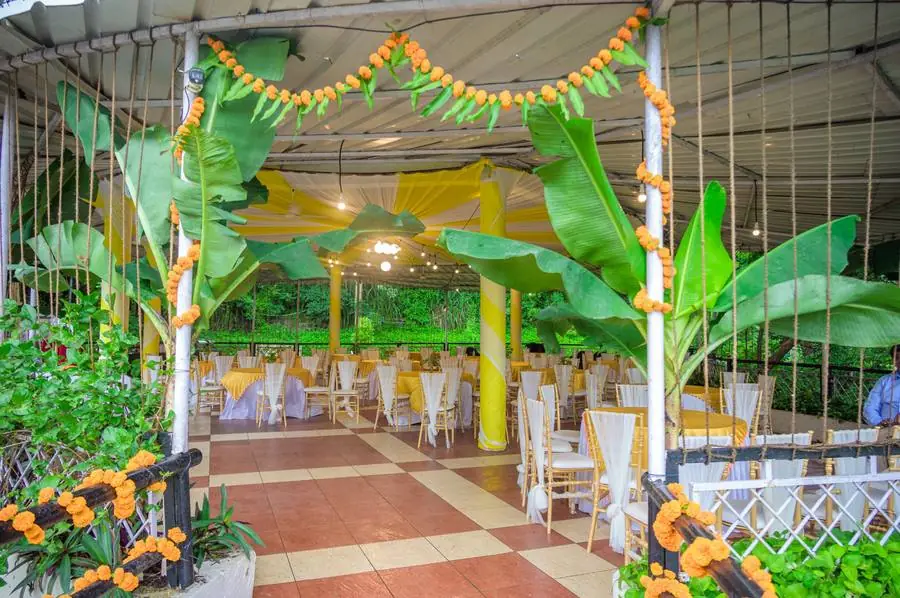
Hiranya is about 8 km from Ellora, around 15 minutes by road, so it is easy to return for a second, slower visit to the Jain caves. We can arrange a guided Ellora tour, and Jain food is available at our restaurant on request.