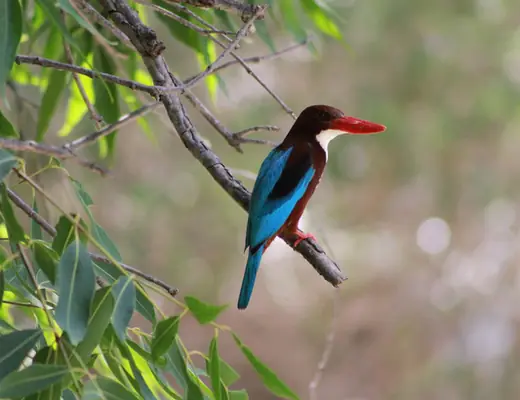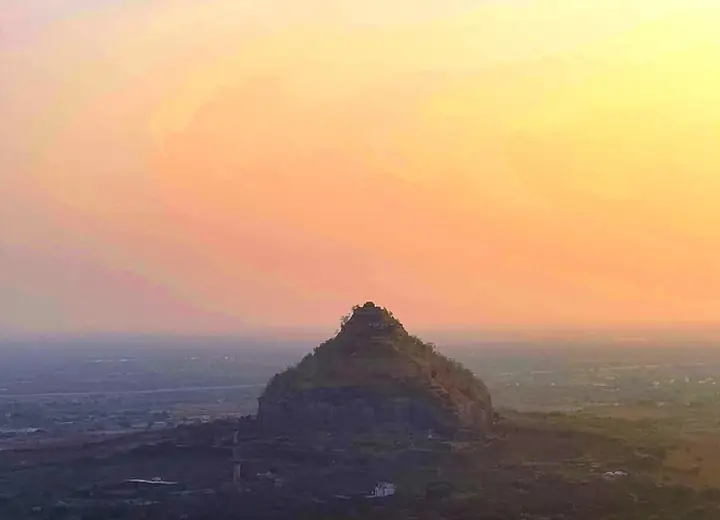
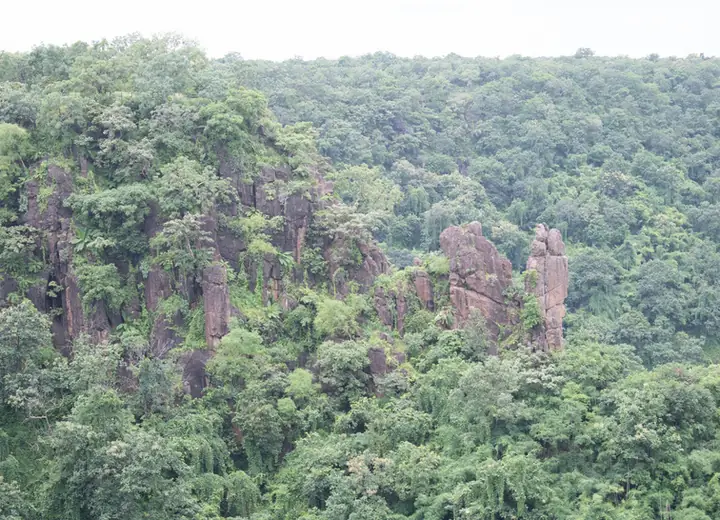
Gautala Autramghat Wildlife Sanctuary is a forested stretch of the Satmala and Ajanta hill ranges near Kannad, roughly 75 km north-west of Chhatrapati Sambhajinagar. Declared in 1986 and covering about 260 square kilometres across the Chhatrapati Sambhajinagar and Jalgaon districts, it offers dry deciduous forest, deep ravines, seasonal waterfalls and a rich bird list, all within a comfortable day trip from the city.
The landscape
The sanctuary takes its name from the Gautala area and the Autram ghat, the winding stretch of road that climbs over the hills on the route towards Chalisgaon. The terrain is a mix of plateau, steep slopes and valleys cut by streams, which run full after the rains and shrink to pools by early summer.
The forest is typical of the northern Deccan: teak mixed with anjan, bel, amla, mahua, bhallatak and other deciduous trees. In the monsoon everything turns green almost overnight, and the ravines fill with the sound of water. By March the trees have shed most of their leaves, the grass is golden and visibility through the forest is at its best.
Waterfalls and places to see
The best known waterfall is Sita Khori, which tumbles into a rocky gorge and is at its most dramatic from late July to September. Smaller cascades appear throughout the hills during a good monsoon, many of them visible from the ghat road.
Inside and around the sanctuary you will also find:
- The Patnadevi temple, an old shrine set in the forest near the Chalisgaon side, and nearby Mahadev temples.
- The Pitalkhora caves, a group of early Buddhist rock-cut caves dating roughly from the second century BCE to the first century CE, set in a ravine on the edge of the Satmala range. They are among the oldest rock-cut monuments in the region and far quieter than Ajanta or Ellora.
- Forest trails and viewpoints across the Autram ghat, which are pleasant for short walks with a local guide.
Wildlife and birds
Gautala supports a surprising range of animals for a forest so close to farmland. Records include leopard, sloth bear, wolf, jungle cat, nilgai, chinkara, barking deer, wild boar and grey langur. Sightings of the larger mammals are never guaranteed; this is not a safari park, and the animals are shy. Your best chance is early in the morning, quietly, with someone who knows the tracks.
Birders will find more to enjoy. More than 240 species have been recorded in the sanctuary, from raptors soaring over the ghats to paradise flycatchers, woodpeckers and warblers in the forest canopy. Winter brings migrants, and the monsoon brings breeding activity and song. Snakes such as cobras, kraits and rat snakes are present too, so watch your step on trails.
When to go
- July to September: waterfalls in full flow and deep green forest. Trails can be slippery and some roads muddy; go with care.
- October to February: the most comfortable season, with pleasant temperatures, good birding and clear views.
- March to June: hot and dry, but good for spotting animals near water sources early in the day. Carry plenty of water.
Practical tips
- Access, permits and trail rules are managed by the Maharashtra Forest Department. Check at the forest office in Kannad or the sanctuary entry before setting out, and follow their guidance on where you may walk.
- Hire a local guide if you plan to go beyond the roadside viewpoints. It is easy to lose your way in the ravines.
- Facilities inside are basic. Carry water, snacks, a first-aid kit and a torch, and take all rubbish back with you.
- Mobile coverage is patchy in parts of the forest, so tell someone your plans.
- Wear muted colours, good walking shoes and long trousers.
- Start early. The drive from the city takes roughly two hours, and the forest is liveliest in the first hours after sunrise.
Getting there
Kannad lies on the highway from Chhatrapati Sambhajinagar towards Dhule, and the Autram ghat continues beyond it. A private car is the most practical way to explore, since the places worth seeing are spread out. Chalisgaon, on the Jalgaon side, is the nearest railway town if you are approaching from the north.
If you enjoy Gautala, you will feel at home at Hiranya, where grey langurs, peafowl and more than 50 bird species share the 15 acres around Mombatta Lake. Our team can help you plan an early start from Daulatabad and pack you off with a good breakfast for the road.