For photographs at Ellora, arrive when the site opens for soft light and empty courtyards, then return to the caves in the afternoon, when the sun swings round to the west-facing cliff and lights the facades and cave interiors. A wide-angle lens is essential for the Kailasa temple, a fast lens helps inside the darker caves, and flash, tripods and drones all come with restrictions, so pack light and check the rules on the day.
Understanding the light
The caves at Ellora are cut into a long escarpment that faces roughly west. This one fact shapes your whole day. In the morning, the cliff is in shade: light is soft and even, contrast is low, and courtyards are quiet, which is ideal for wide scenes and people-free frames.
By mid-afternoon, the sun comes round to face the caves. Warm light pours into porches and halls, picks out carved figures and makes the rock glow a honeyed colour. Late afternoon is when many interiors look their best, so if you can, split your visit or linger until then. Midday is the hardest time, with harsh overhead light and deep shadows.
Which caves to photograph
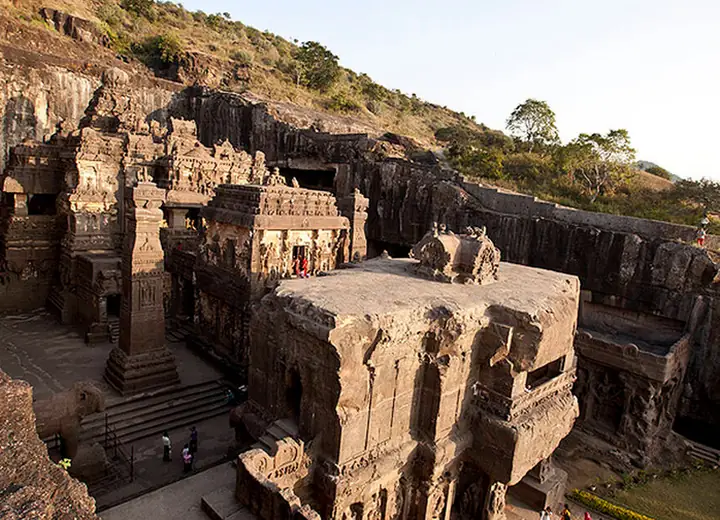
- Kailasa temple (Cave 16): the showpiece. From the courtyard, look for the life-size elephants, the tall victory pillars and the carved panels along the side galleries. For the classic overview, take the path up the hillside around the rim of the excavation and shoot down into the temple.
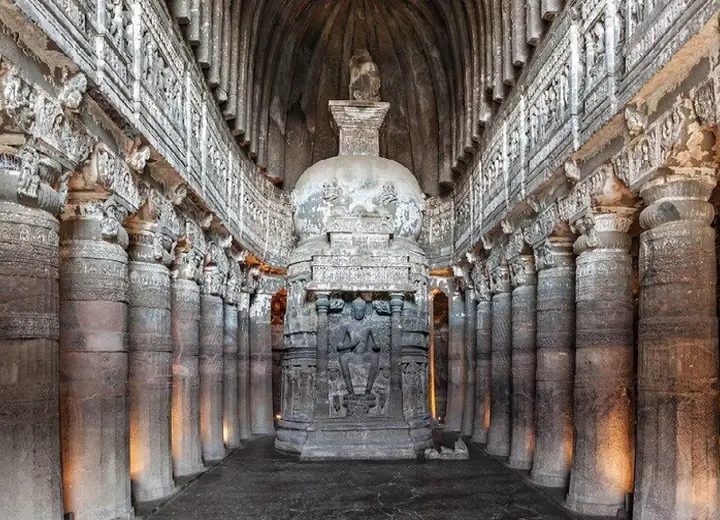
- Cave 10 (Vishvakarma): the Buddhist chaitya hall with its ribbed, timber-like ceiling and a seated Buddha. The upper facade looks beautiful in afternoon light.
- Cave 12 (Teen Tal): a three-storey Buddhist monastery with rows of Buddhas on the upper floor, good for repeating patterns and symmetry.
- Cave 15 (Dashavatara) and Cave 21 (Rameshwar): rich Hindu sculpture, excellent for detail shots of river goddesses and dancing figures.
- Cave 29 (Dhumar Lena): a vast hall with enormous guardian figures. In the monsoon, a waterfall spills over the cliff nearby.
- The Jain caves (Caves 30 to 34): a short drive or walk north, quieter and finely detailed, especially the upper hall of Cave 32.
Lenses and settings
A wide or ultra-wide lens, in the 16 to 24 mm range on full frame, is the most useful single tool here, both for Kailasa and for cramped interiors. A standard zoom handles most other scenes. A short telephoto is lovely for isolating faces, hands and ornaments, and for the langurs that live around the site.
Inside the caves, light falls away quickly. Rather than reaching for flash, open up your aperture, raise the ISO, and brace yourself against a pillar or wall. Modern cameras and phones cope well; shoot in RAW if you can, and bracket exposures for scenes with bright doorways and dark interiors. Night or low-light modes on phones work surprisingly well in the halls.
Rules: flash, tripods and drones
The Archaeological Survey of India allows photography at most protected monuments, including Ellora, but conditions apply. Do not use flash on carved or painted surfaces. Tripods and professional or commercial shoots generally need prior permission, and staff may stop you from setting one up without it.
Flying a drone over a protected monument without the necessary written permissions is not allowed, and national drone rules apply on top of that. The simple advice is: do not bring one to the site unless you have arranged permissions well in advance.
At Ajanta, rules are stricter because of the fragile paintings. Flash is never allowed, and staff may restrict photography inside the painted caves, so follow their instructions.
Photographing people respectfully
Ellora is a living place as well as a monument. Pilgrims, school groups and local families make wonderful subjects, but ask before photographing anyone up close, and be especially considerate around worshippers at Grishneshwar nearby.
Beyond the caves
The countryside around Ellora offers great light of its own. Daulatabad Fort, with its Chand Minar, looks dramatic from the surrounding ridges at sunset, and in winter the morning mist over the lakes is worth an early alarm. The skies here are dark enough on clear nights for the Milky Way.
At Hiranya, beside the old Mombatta Lake and about 15 minutes from Ellora, we arrange photography and birdwatching workshops on request, as well as a sunset trek to a ridge overlooking Daulatabad Fort. Ask us on WhatsApp at +91 90494 27222 and we will help you time your shoot.