Devagiri, the city we now call Daulatabad, was founded around 1187 by Bhillama V of the Seuna Yadava dynasty, who made its fortified hill his capital. For more than a century the Yadavas ruled a large Deccan kingdom from here, and under rulers such as Singhana II and Ramachandra it became one of the richest courts in India. It fell to the Delhi Sultanate in stages between 1296 and 1317.
Who were the Seuna Yadavas?
The Seunas, often simply called the Yadavas of Devagiri, began as feudatories of the Western Chalukya kings of Kalyani. As Chalukya power weakened in the late twelfth century, several subordinate families broke away, and the Yadavas were among the most successful.
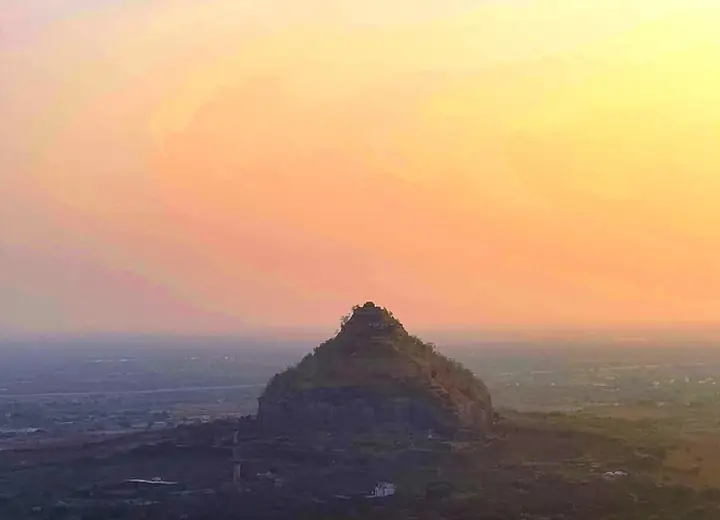
Bhillama V is the ruler who turned this family into an independent power. He is generally dated as ruling from about 1175 as a feudatory and from about 1187 to 1191 as a sovereign king. His great decision was to establish his capital at Devagiri, a conical hill rising abruptly from the plain, which could be shaped into a formidable stronghold. The name is usually understood as the hill of the gods.
Building the fortress
The defences that still impress visitors at Daulatabad owe much to the Yadava builders. They cut back the lower slopes of the hill to leave near-vertical rock faces, so that the summit could be approached only by a single, controlled route. A deep moat and the rock-cut tunnel known as the Andheri completed the design.
Later rulers added walls, gates, bastions and cannon, but the basic idea of the fort, a natural rock made unclimbable by human work, is Yadava. When you walk the site, it is worth remembering that the oldest and most essential layer is the rock itself.
The height of the kingdom: Singhana II
The kingdom reached its greatest extent under Singhana II, also written Simhana, who is usually dated to the first half of the thirteenth century. At its height, Yadava power reached from the Narmada river in the north towards the Tungabhadra in the south.
His court was a centre of learning. The musicologist Sharngadeva wrote the Sangita Ratnakara during his reign, a Sanskrit treatise that remains a foundational text for both Hindustani and Carnatic music. It is a remarkable thought that this work was composed under the patronage of a court based a short distance from where Hiranya stands today.
Ramachandra and Hemadri
Ramachandra, who ruled from around 1271, was the last great Yadava king. His reign, and that of his predecessor Mahadeva, is closely associated with the minister and scholar Hemadri, known in Marathi as Hemadpant.
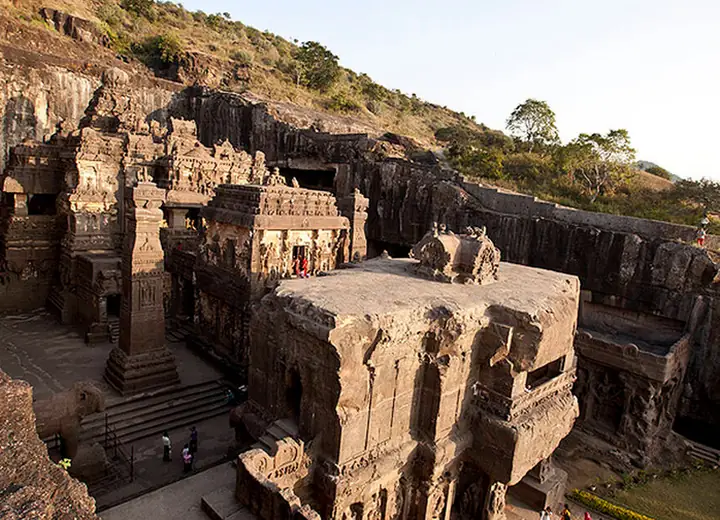
Hemadri compiled the Chaturvarga Chintamani, a vast Sanskrit encyclopaedia on religious duties, vows and rituals. His name has also become attached to a style of temple building found across Maharashtra, with walls of dark stone blocks fitted together without mortar. These are widely called Hemadpanti temples, though the style was used across the region and not every such temple can be linked to him personally.
The same period saw a flowering of Marathi. Around 1290, during Ramachandra's reign, the poet-saint Dnyaneshwar composed the Dnyaneshwari, a Marathi commentary on the Bhagavad Gita that is still read and loved across Maharashtra.
The fall of Devagiri
The kingdom's wealth drew attention from the north. In 1296 Alauddin Khalji, then a general and soon to be sultan of Delhi, made a sudden raid on Devagiri and left with enormous treasure. Ramachandra agreed to pay tribute.
When the tribute lapsed, the Delhi general Malik Kafur led a campaign against Devagiri in 1307 and 1308, and Ramachandra again submitted, ruling on as a tributary. After his death, his son Singhana III, also called Shankaradeva, resisted and was killed in 1313. A final revolt under Harapaladeva was put down, and by 1317 the kingdom had been annexed to the Delhi Sultanate. Ten years later, Muhammad bin Tughluq renamed the city Daulatabad and made it his second capital.
Seeing Yadava Devagiri today
Little survives above ground that can be firmly dated to the Yadava court, apart from the fortress itself. The best way to connect with this period is to walk the fort slowly, looking at the scarped cliffs, the moat and the Andheri, which together form the Yadava plan. In the wider region, several temples in the Hemadpanti style give a sense of the architecture of the age.
Readers who enjoy Marathi literature may also like to reflect that the language of the Dnyaneshwari matured in this very landscape.
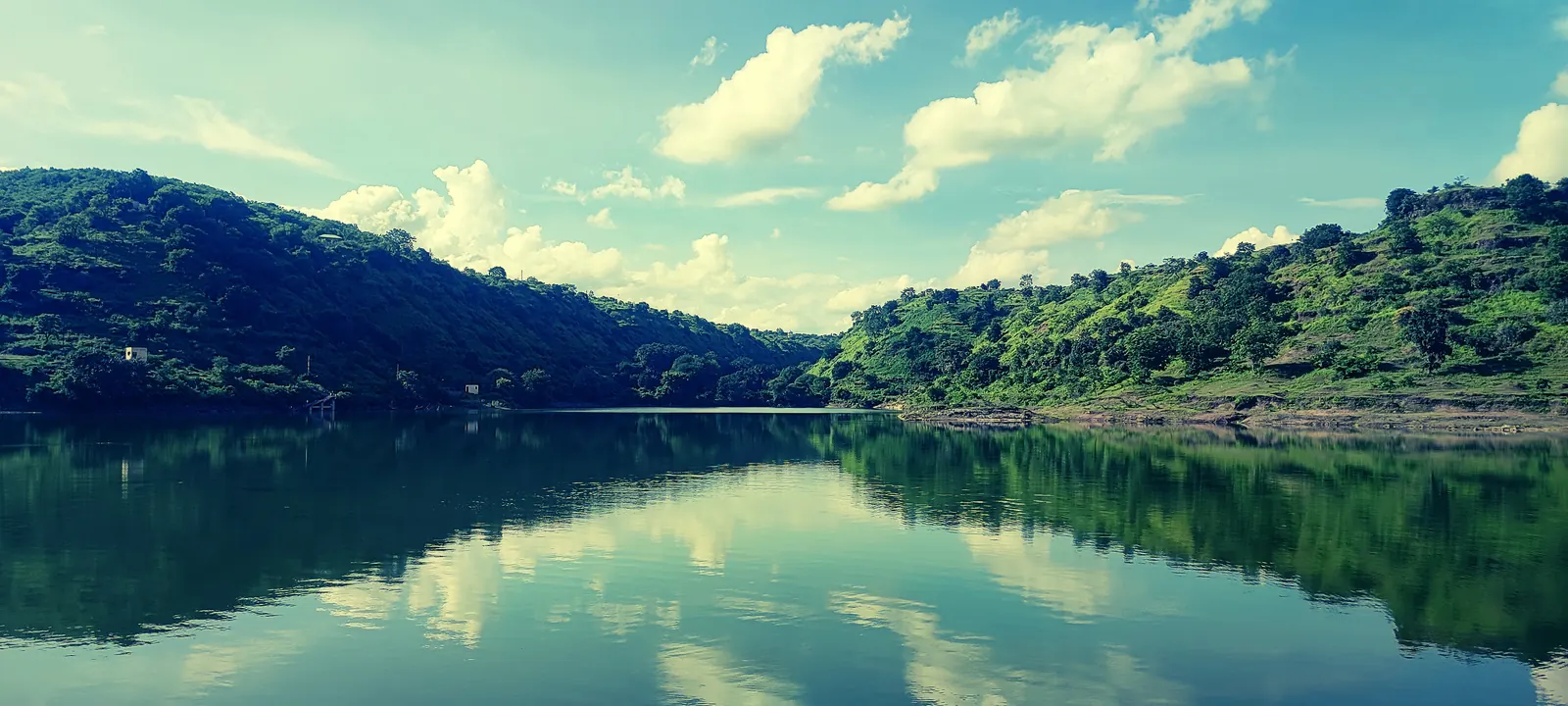
At Hiranya we are about a kilometre from the fort, and guests often spend a morning on the hill and an evening by Mombatta Lake talking over what they have seen. If you would like suggestions for Yadava-era sites to add to your trip, our team is happy to help.