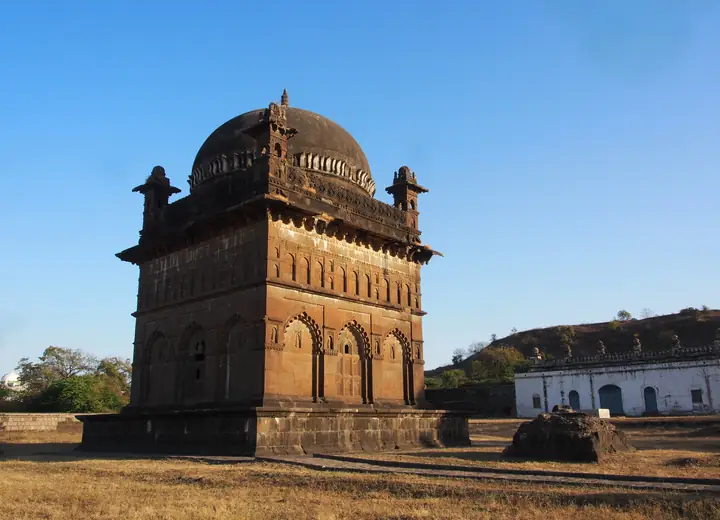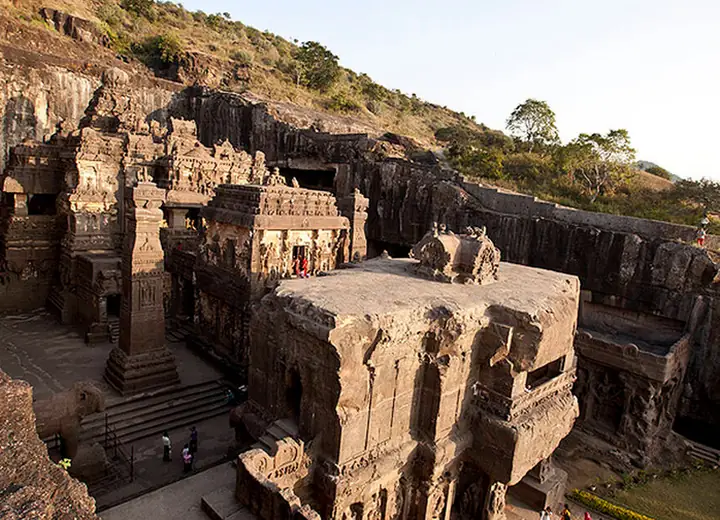
The dark stone that the builders of Ellora Caves used for their temples — the same dark basalt that Daultabad Fort is built from, the same rock that colours the hillsides around Hiranya Resort — is not local stone. It is the product of one of the most violent geological events in earth's history.
66 million years ago, over a period of approximately 30,000 years, a plume of superheated magma from the earth's mantle punched through the Indian subcontinent and erupted across the surface in a series of events so massive that they may have contributed to the extinction of the non-avian dinosaurs. The lava that poured across central India formed a layer of basaltic rock — called the Deccan Traps — that at its thickest reaches over 3,000 metres deep.
This volcanic legacy shaped everything that came after. The Deccan basalt, once weathered, produces some of the richest agricultural soil in the world — the 'black cotton soil' (regur) that made the Deccan Plateau one of the most productive farming regions in Asia. That agricultural wealth attracted successive civilisations: the Satavahanas, the Rashtrakutas, the Yadavas, the Bahmani Sultanate, the Nizam Shahis, the Mughals, and finally the Marathas — all drawn to this landscape by its extraordinary productive capacity.
The caves at Ellora and Ajanta were carved from this basalt. The reason rock-cut architecture flourished in the Deccan is partly practical: basalt carves cleanly and holds its shape for millennia without requiring the mortar and structural engineering that built structures require. A cave is essentially eternal in a way that a building, however well constructed, is not.
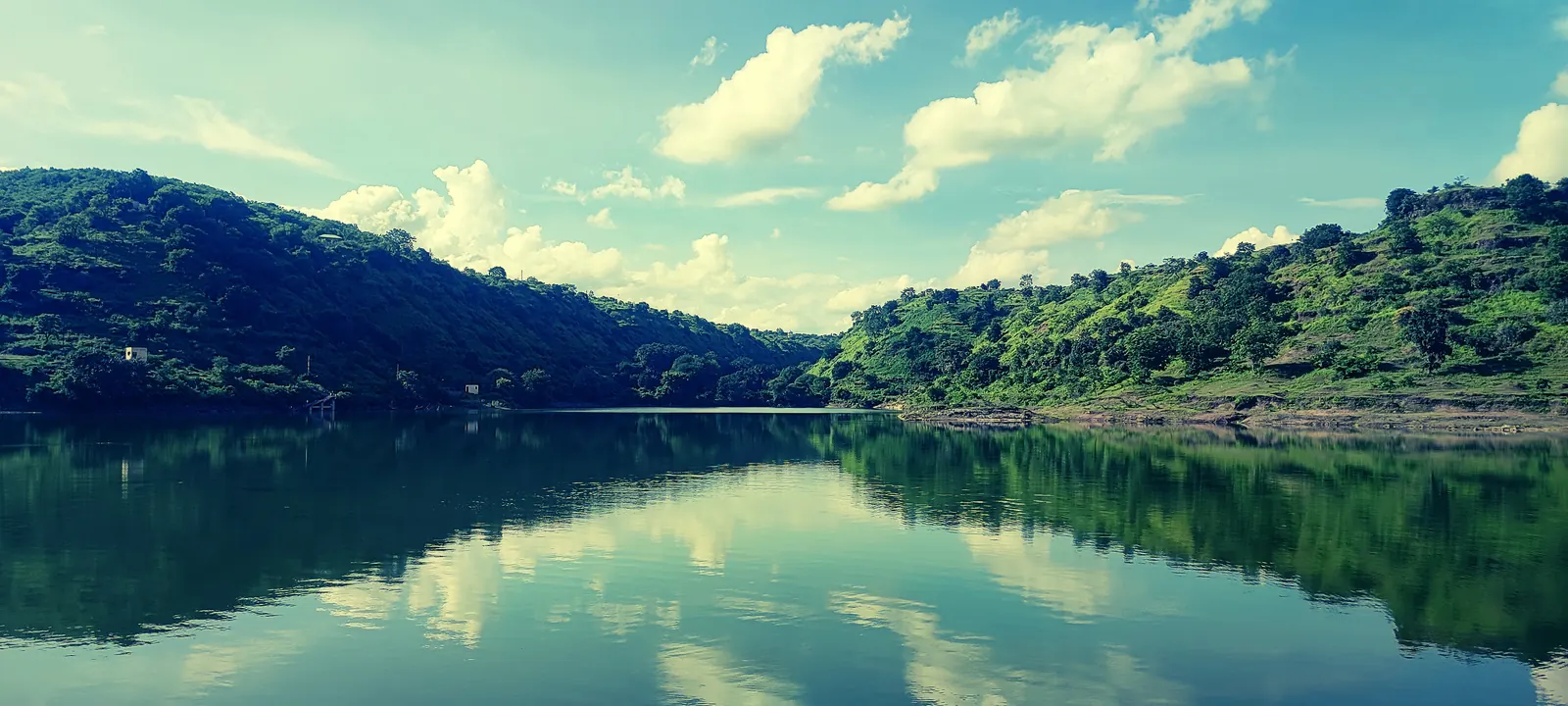
Walking around Hiranya Resort — across the ancient dam, through the basalt-edged lake path — you are moving through geological time as well as human history. The dark stone under your feet is 66 million years old. The fort walls above you are 800 years old. The resort is a few decades old. All of it built from, and built upon, the same volcanic rock.