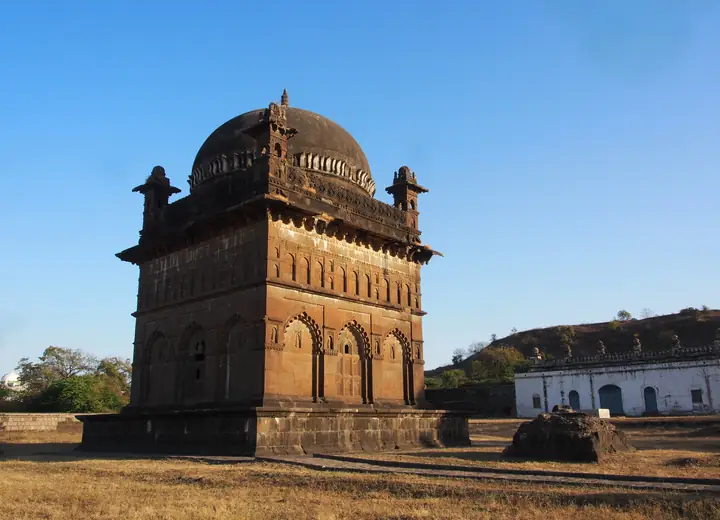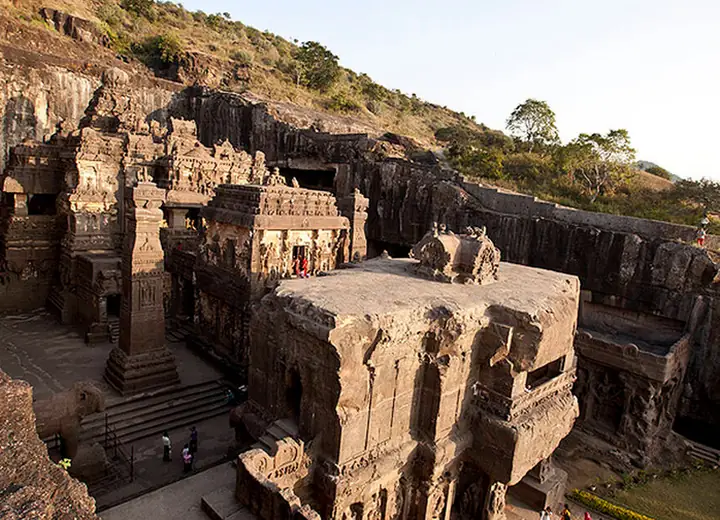
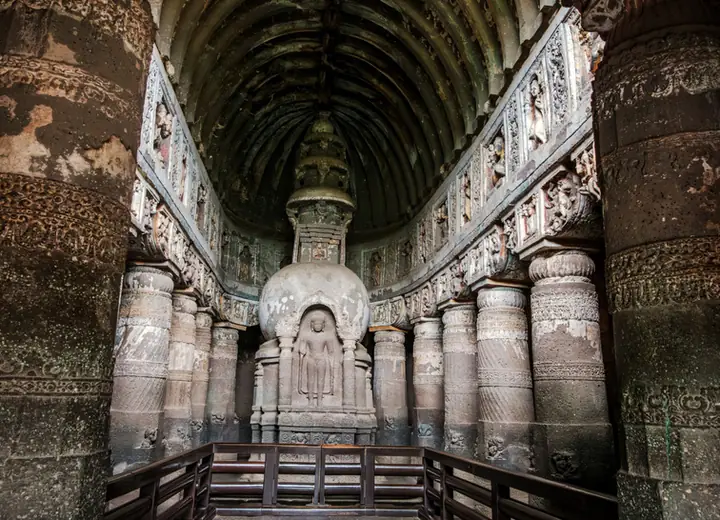
While Ellora (35km) and Ajanta (120km) receive international attention, the Aurangabad Caves sit largely undiscovered within 10km of the city centre. This is a significant oversight, because these 12 rock-cut Buddhist monasteries contain some of the most refined sculptural work of the early medieval period.
The caves are divided into two groups, called (somewhat unimaginatively) Group 1 and Group 2, located on either side of a rocky hillock near the Aurangabad fort walls. They date to the 6th and 7th centuries CE — contemporary with the earliest caves at Ellora — and were created by Buddhist communities under the patronage of the Chalukya dynasty.
Cave 7 is the most celebrated. Its entrance is flanked by elaborately carved yakshi (female guardian) figures of exceptional quality — their postures, jewelry, and expressions anticipate the developments in Indian sculptural style that would reach their peak at Ellora in the following centuries. The main shrine within contains a preaching Buddha surrounded by Bodhisattvas carved in a style that shows clear Central Asian influence, probably arriving through the Silk Road trade routes.
What makes the Aurangabad Caves additionally appealing is their atmosphere. Because they receive perhaps a fraction of Ellora's footfall, a visitor on a quiet weekday can have entire cave chambers to themselves — sitting in a meditation hall carved 1,400 years ago for exactly that purpose, in almost complete silence, with only the call of birds outside.
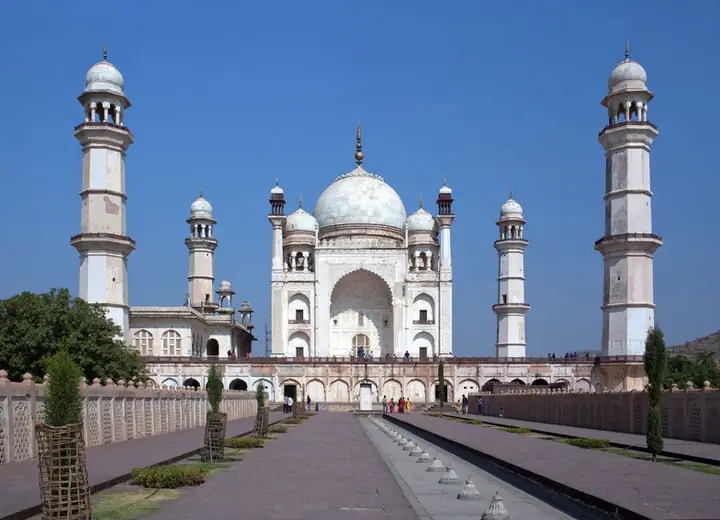
Entry is by a small ASI ticket. From Hiranya Resort, allow 45–50 minutes by taxi for the drive and the climb to the caves. Best combined with a visit to Bibi Ka Maqbara and the Panchakki water mill in Aurangabad city.