The Deccan landscape around Ellora is shaped as much by its trees as by its hills. A handful of species appear again and again: neem, banyan, peepal, tamarind, palas and karanj, often standing at the edge of a village, a temple or a field. At Hiranya, the tree guests ask about most is a mango that is about 150 years old, older than many of the buildings in the nearby towns.
The 150-year-old mango tree
Mango trees can live and bear fruit for well over a century, and a tree of this age has a presence all of its own. The trunk is thick and furrowed, the canopy broad enough to cast a deep pool of shade, and the leaves change from coppery pink when new to a dark, glossy green. In early spring it flowers in sprays of tiny blossoms, and by early summer the fruit begins to set.
Old mangoes are also small ecosystems. Their bark carries lichens and mosses, their branches offer perches for barbets, bulbuls and parakeets, and in summer they draw squirrels and langurs. Sitting under one on a hot afternoon, you understand why so many Indian stories are set beneath a mango tree.
Neem: the village pharmacy
Neem is native to the Indian subcontinent and is found in almost every Deccan village. It has feathery compound leaves with serrated, slightly curved leaflets, and in spring it produces small, sweet-scented white flowers followed by olive-like yellow fruit. Crush a leaf and you will notice its bitter smell.
Neem twigs have long been used as toothbrushes, the leaves in traditional remedies, and neem oil and cake in farming. It also tolerates drought and poor soil, which makes it one of the most dependable shade trees in a dry landscape.
Banyan and peepal: the sacred figs
The banyan is India's national tree and a member of the fig family. Its most striking feature is its aerial roots, which drop from the branches, thicken and turn into new trunks, so that a single old banyan can spread into what looks like a small grove. The leaves are large, leathery and oval, and the small red figs are a feast for birds and fruit bats.
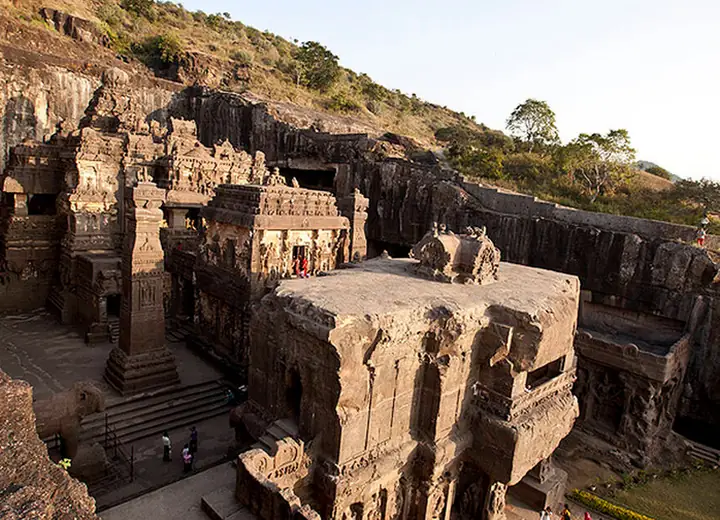
The peepal, another fig, is recognised by its heart-shaped leaves that end in a long, slender tip. Even in the slightest breeze the leaves flutter and whisper. It is sacred in Hinduism, Buddhism and Jainism; the Buddha is said to have attained enlightenment beneath one, and many temples and village squares have a peepal with a raised platform around its base. With the Buddhist caves of Ellora close by, the peepal feels especially at home here.
Tamarind, palas and karanj
A few other trees are worth learning on a walk or drive:
- Tamarind: long naturalised in India, with fine, feathery leaves and brown, curved pods whose sour pulp flavours much of Deccan cooking. Old tamarinds grow into huge, dense trees.
- Palas, or flame of the forest: native to the region, it drops most of its leaves in late winter and then bursts into clusters of vivid orange flowers, traditionally used to make colour for Holi.
- Karanj: a native shade tree with glossy leaves, often planted along roads and field edges. It flowers in pale pink-lilac sprays and produces flat pods whose seeds yield oil.
- Babul: a thorny acacia of dry, open land, with small yellow pom-pom flowers and pods eaten by goats.
- Jamun: a tall evergreen that gives purple-black fruit at the start of the monsoon.
How to read a Deccan tree
You do not need to be a botanist to enjoy trees. Start with the leaf shape, then look at the bark and the overall form of the tree. Notice which trees keep their leaves in summer and which go bare, and watch what feeds on their flowers and fruit. Flowering seasons are especially rewarding: palas in late winter, neem in spring and mango before the heat.
Trees also help with birding. A fruiting fig attracts barbets, hornbills and orioles; a flowering tree brings sunbirds; and tall, isolated trees are favourite roosts for peafowl at dusk. Once you learn the trees, the birds become easier to find.
Slowing down under the trees at Hiranya
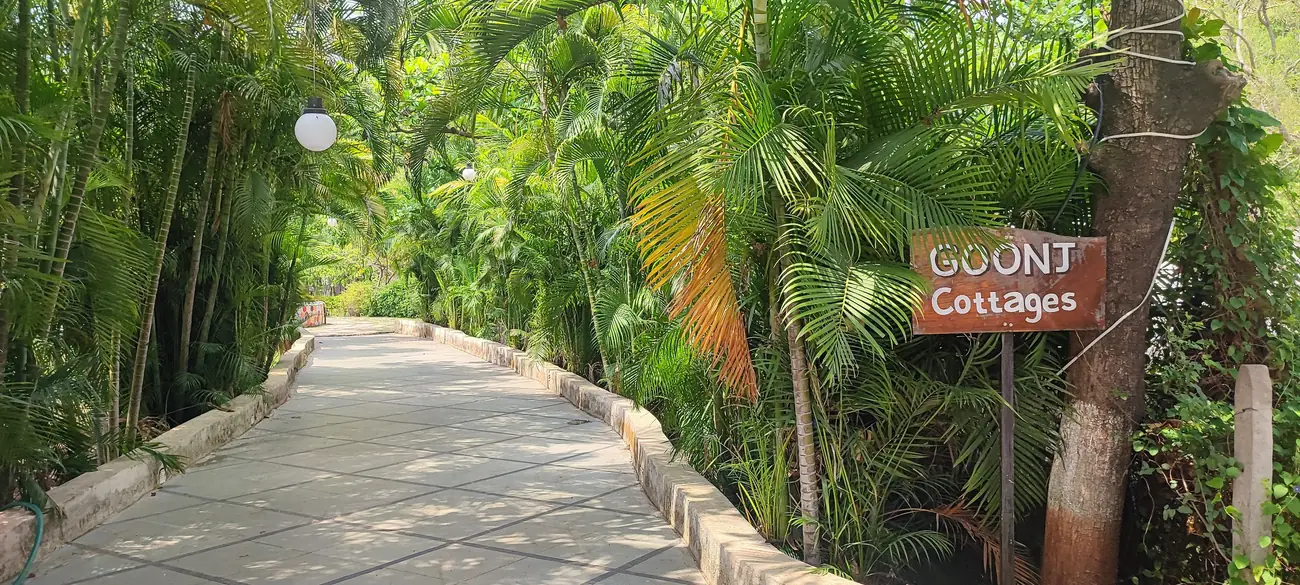
Hiranya's 15 acres on Mombatta Lake are a gentle place to practise this kind of noticing, with the old mango tree as a natural starting point. Bring a notebook, take a slow walk in the early morning, and ask our team about the trees and birds you come across.