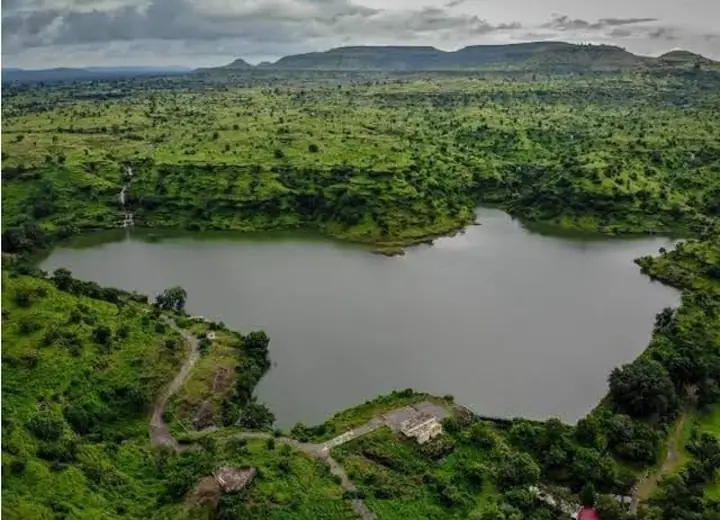
If you wake up at Hiranya Resort and hear what sounds like a symphony orchestra tuning up outside your tent — that's just a normal morning. The lake, the forest, and the 150-year-old mango tree on the property together create a habitat that supports one of the most diverse bird communities in the Marathwada region.
Year-round residents you'll encounter on any morning walk include the Indian roller (locally called Neelkanth, sacred to Shiva), numerous species of kingfisher along the lake edge, the Malabar whistling thrush — whose liquid, fluting call was described by ornithologist Salim Ali as the most beautiful birdsong in India — and the resident family of Indian grey langurs who share the property with us and tend to attract birding attention themselves.
Winter months (October through February) bring the migratory arrivals. The lake attracts painted storks, open-billed storks, and occasionally the endangered lesser adjutant stork. Warblers and flycatchers move through the forest in waves during October and November. Common cranes have been spotted overhead on clear November mornings.
The resident langur troop — numbering around 25 individuals including several young ones — are fascinating in their own right. Their alarm calls serve as a natural early warning system for other wildlife. When you hear the langurs bark sharply from the trees, look for what has alarmed them — often a raptor circling overhead.
Our guided birdwatching walks start at 6am, before the heat and human activity reduce bird visibility. Binoculars are available for loan and our guide knows the specific perches and feeding spots that make a morning walk genuinely productive for birders of all skill levels.