The main festivals visitors can experience around Ellora and Chhatrapati Sambhajinagar are Ganeshotsav in late summer, Pola for the region's bullocks, Diwali in autumn and Makar Sankranti in January, along with busy days at Grishneshwar during Shravan and Mahashivratri. Dates follow the Hindu lunar calendar and change every year, so check the current calendar before you plan around a particular day.
Festivals here are less about spectacle for tourists and more about family, farming and faith. That is exactly what makes them rewarding to witness, as long as you arrive with curiosity and a little patience for crowds and traffic.
Ganeshotsav: ten days of devotion and drums
Ganesh Chaturthi usually falls in August or September and begins a festival that runs until Anant Chaturdashi, when idols are carried in procession for immersion. Across Maharashtra, households bring home a clay idol of Ganesh, and neighbourhood groups set up pandals with larger idols, lights and themed decorations.
In Chhatrapati Sambhajinagar, evenings bring aarti, prasad and the sound of dhol-tasha groups practising and performing. Modak, the sweet dumpling said to be Ganesh's favourite, appears in homes and sweet shops everywhere. The immersion day is loud, joyful and very crowded, so if you plan to watch, stay on the side of a road rather than in the thick of a procession, and allow extra time for any travel that day.
Pola: a day for the bullocks
Pola, often called Bail Pola, is a farmers' festival that honours the bullocks who pull the plough. It is generally observed on the new moon day that closes the month of Shravan, which usually lands in August or September.
On Pola, bullocks are given a day of rest, bathed, and decorated with painted horns, colourful cloths, bells and garlands. In the villages they are fed special food, worshipped and walked around the village in the evening. It is a quiet, heartfelt festival that reflects how central farming still is in Marathwada. If you are travelling through villages around Daulatabad and Khuldabad on Pola, you may see beautifully dressed animals; always ask before photographing people or their livestock.
Diwali: lamps, rangoli and faral
Diwali usually falls in October or November and runs over several days. Homes are cleaned, doorsteps are decorated with rangoli, and rows of diyas and hanging akash kandils (paper lanterns) light up houses and shops. In Maharashtra, the main morning often begins with an early abhyanga snan, a ritual oil bath, before sunrise.
Food is central. Families prepare faral, a spread of festive snacks such as chakli, karanji, shankarpali, chivda and besan ladoo, and share it with neighbours and guests. The weather at this time of year is usually pleasant and the countryside is still green after the monsoon, making it a lovely time to visit. Expect fireworks in the evenings and busier roads around the main days.
Makar Sankranti: til-gul and kites
Makar Sankranti is one of the few Hindu festivals tied to the solar calendar, so it falls around 14 January most years. In Maharashtra people exchange til-gul, sweets made of sesame and jaggery, with the words "tilgul ghya, god god bola", roughly "take this sweet and speak sweetly". Women gather for haldi-kunku get-togethers, and kites fill the skies in towns and cities.
January is also the heart of the Hurda season in Marathwada, when tender green jowar is roasted in the fields. Combine the two and you get a very local picture of mid-winter: sesame sweets, kites, and warm grain eaten around a fire.
Other celebrations around Ellora
A few other occasions are worth knowing about:
- Shravan Mondays and Mahashivratri bring large numbers of devotees to Grishneshwar, one of the twelve Jyotirlingas. Expect long queues and plan an early start.
- Gudi Padwa, the Marathi New Year in spring, is marked by gudis (decorated poles with a cloth and an upturned pot) raised outside homes, and puran poli on the table.
- Maharashtra Tourism has at times organised the Ellora-Ajanta festival of classical music and dance in the region. It has not been held every year, so check current announcements if you are hoping to attend.
- Khuldabad, the town of Sufi shrines near Ellora, marks urs gatherings at its dargahs, which draw pilgrims from across the region.
A few practical tips for festival travel:
- Book early for Diwali and the long weekends around Ganeshotsav, as rooms and cars fill quickly.
- Dress modestly and remove footwear where asked at temples and pandals.
- Keep some patience in reserve for traffic, and start early on the busiest days.
- Ask before photographing rituals, and never block a procession for a picture.
- Keep ear plugs handy if you are sensitive to loud music and firecrackers.
Festivals at a gentler pace
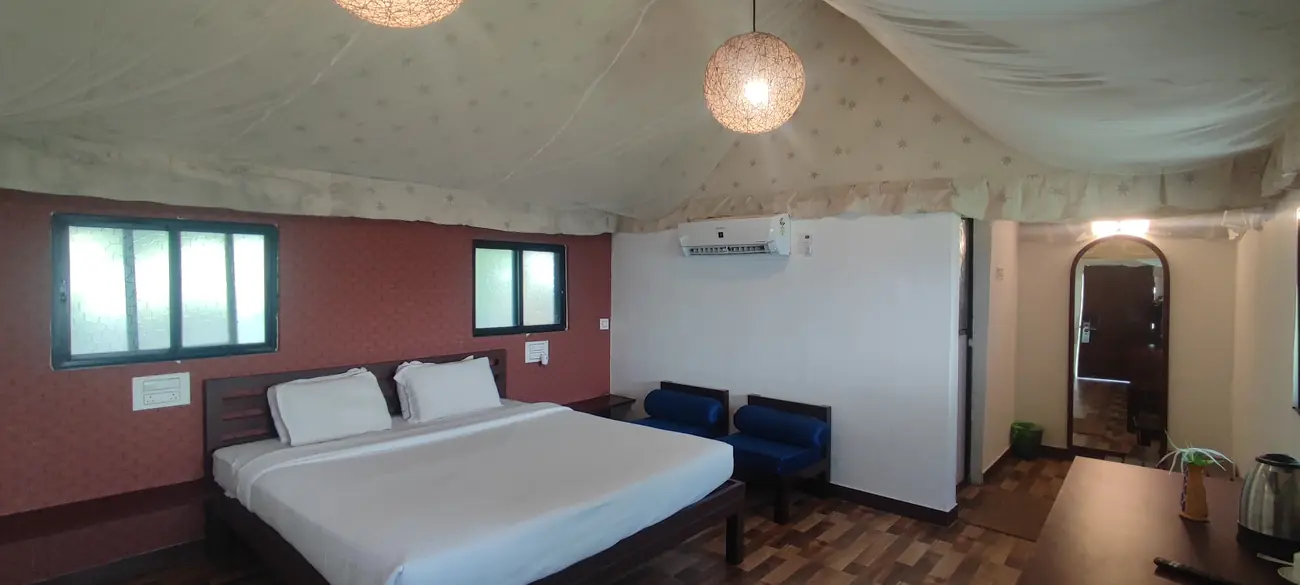
Staying just outside the city lets you dip into the celebrations and then step back into quiet. At Hiranya, the lake and trees are a calm counterpoint to festival evenings, and our team can tell you what is happening nearby during your stay. Winter guests can also join a Hurda evening around the fire.