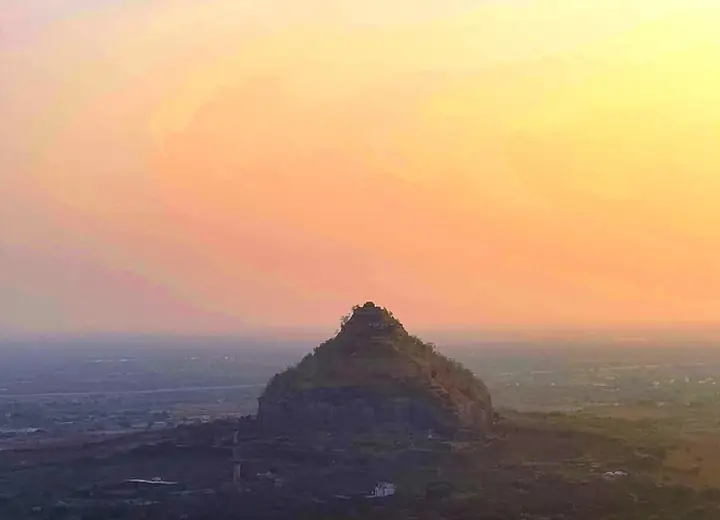
Climbing Daulatabad Fort from the entrance gate to the summit takes most reasonably fit visitors about one and a half to two hours up, and a total of around three hours with time to look around and come down. The route passes the Chand Minar, the Chini Mahal, a bridge over the moat and the pitch-dark tunnel known as the Andheri, before a final stretch of rock-cut steps to the top. Start early, carry water and a torch, and go at your own pace.
Before you begin
The fort rises on a conical hill roughly 200 metres high, just off the Ellora road near Chhatrapati Sambhajinagar (Aurangabad). Tickets are sold at the entrance; it is a small ASI entry ticket, and the fort is open daily from morning until around sunset. It is sensible to confirm current timings before you set out.
Pack light but sensibly:
- At least a litre of water per person; refreshments inside are limited.
- A torch or phone light for the Andheri.
- Shoes with a good grip; the rock steps can be smooth and uneven.
- A hat and sun protection for the upper, exposed sections.
- A small snack, and a little patience on busy weekends.
The lower fort: gates, tank and minar
You enter through a series of heavy gates set at angles to one another, with iron spikes on the doors. The angled approach was designed to stop attackers from building up speed, and even today you feel the path turning and narrowing as you walk.
Once inside, the lower fort opens out. On one side is the Hathi Haud, a large stone water tank, and a pillared hall that was once a mosque and is now known as the Bharat Mata temple. On the other side stands the 63-metre Chand Minar, raised by the Bahmani sultans in 1445. This is the easiest part of the walk, so take your time with photographs.
The inner fort: Chini Mahal and the ram cannon
Walking on, you pass through the walls of the inner fort, the Kala Kot. Here are the ruins of the Chini Mahal, the tiled palace later used by the Mughals as a prison, and a bastion carrying the Mendha Tope, a large cannon with a ram's head at the muzzle.
This is a good place for a short rest. The bastion gives clear views back over the lower fort and gives you a sense of how high you have already climbed, though the real ascent still lies ahead.
The moat and the Andheri
Next comes the most famous part of the fort. A deep moat cut into the rock separates the citadel from everything below, and you cross it by a bridge. Look down at the sheer, smooth walls; the Yadava builders carved the hill to leave near-vertical cliffs so that the summit could only be reached one way.
That way is the Andheri, meaning darkness. It is a winding tunnel cut through the rock, climbing steeply and turning several times, with almost no natural light. It was built to confuse and trap intruders. Today it is a short but memorable walk: switch on your torch, keep one hand free, and move slowly. It can feel close and warm, and bats sometimes roost inside, so anyone uneasy in dark spaces may prefer to go with a companion.
Up to the summit
You emerge from the Andheri into daylight and continue up stone steps. Along the way you will see a pavilion known as the Baradari, a pleasant spot to pause in the shade and catch your breath. Beyond it the path becomes steeper and more exposed.
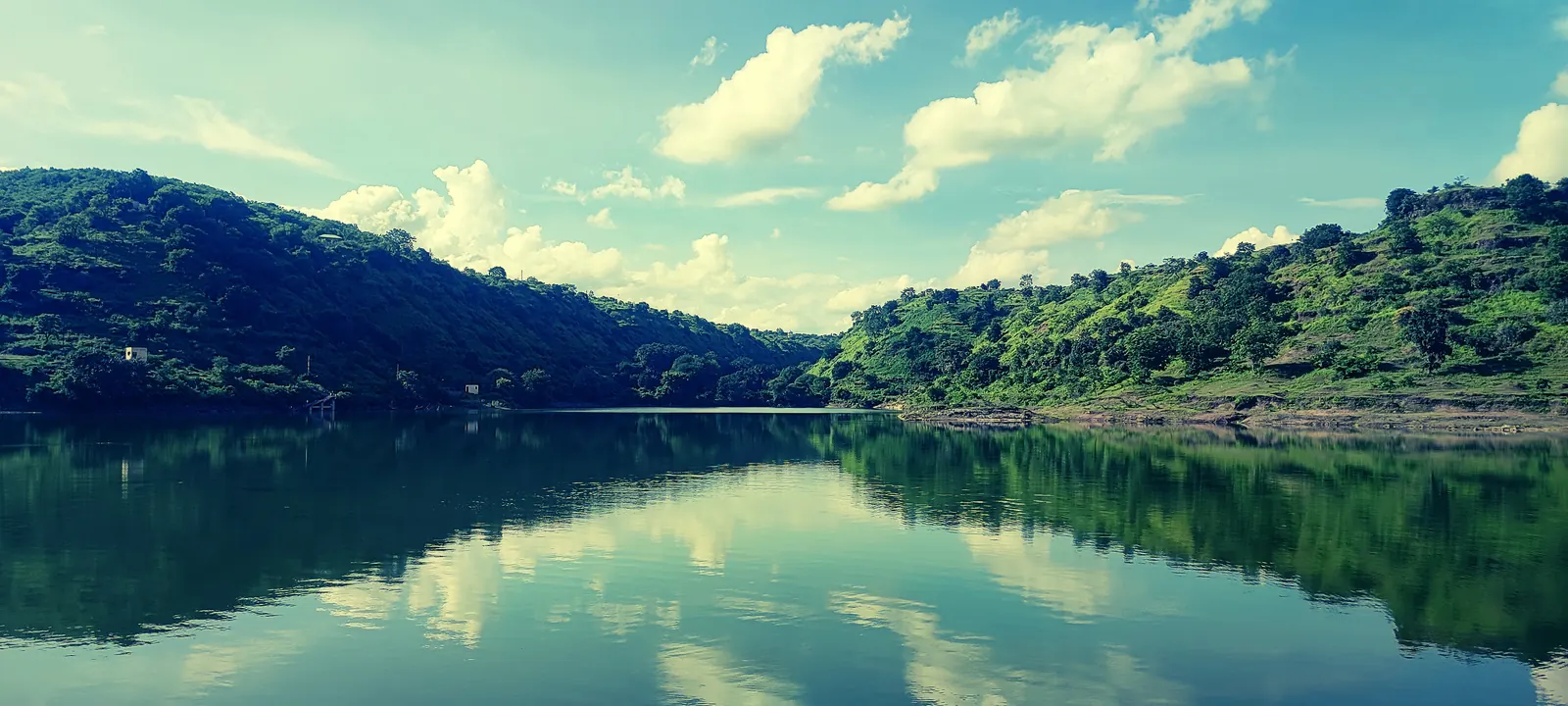
At the top is a bastion with a large cannon, and a view that makes the effort worthwhile. On a clear day you can see the plains stretching away on every side, the Chand Minar far below, the waters of Mombatta Lake and the hills towards Ellora and Khuldabad. It is easy to understand why so many rulers wanted this hill.
Come down the same way, carefully, especially through the Andheri. Descending on smooth steps is harder on the knees than climbing, so walking poles can help if you use them.
Best time of day and season
The best time to start is at opening, in the cool of the morning. By late morning the upper sections can be very hot and there is little shade, particularly from March to June. A late-afternoon climb is possible, but leave enough time to be down comfortably before closing.
The most pleasant months are from August to January, when the hills are green after the monsoon or the air is cool and clear in winter. After heavy rain some steps can be slippery, so take extra care in July and August. Families with young children and older visitors often enjoy the lower and inner fort and turn back before the Andheri, which is a perfectly good visit in itself.
Hiranya is about a kilometre from the fort gates, so you can be among the first visitors in the morning and back by the pool before the day warms up. If you would like a guide for the climb, just let us know when you book.