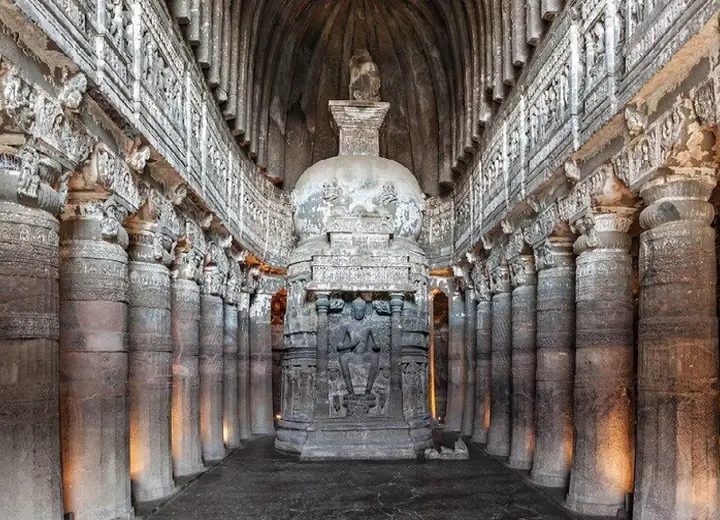
In 1819, a young British Army officer named John Smith was hunting tigers in the forested gorge of the Waghora River when his local guides showed him something extraordinary: a rock face covered in ancient carvings. Further exploration revealed not one but 30 rock-cut temples, filled with paintings of such colour and sophistication that Smith initially refused to believe they were ancient.
The caves at Ajanta had been created between the 2nd century BCE and the 6th century CE — the Buddhist India of the Satavahana and Vakataka dynasties — then abandoned so completely that the jungle reclaimed them entirely. For over 1,200 years, they sat undiscovered while empires rose and fell around them.
What Smith had found was the most complete surviving collection of ancient South Asian painting in the world. The 30 caves contain murals that cover an estimated 1,550 square metres of wall surface, depicting the Jataka tales (stories of the Buddha's previous lives) with a naturalism and psychological depth that is genuinely breathtaking.
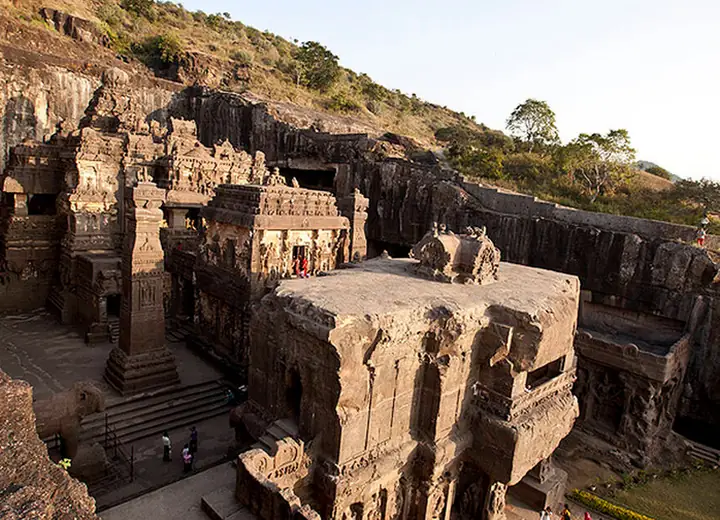
Unlike Ellora, which is carved into a hillside, Ajanta curves around a horseshoe bend of the Waghora River gorge. The effect — 30 elaborately carved facades reflected in the river below — is overwhelmingly beautiful, particularly in early morning light.
The most celebrated painting is Cave 1's famous Bodhisattva Padmapani — a blue lotus-holding figure of such serene compassion that it has been called the Indian equivalent of the Mona Lisa. The delicacy of the facial expression and the subtlety of the hand position have influenced Indian art for centuries since their rediscovery.
From Hiranya Resort, Ajanta is 120km — approximately 2.5 hours. We strongly recommend a full-day trip starting at 6am. Ajanta is open Tuesday through Sunday, 6am to 5:30pm (closed Mondays). Separate tickets required.